
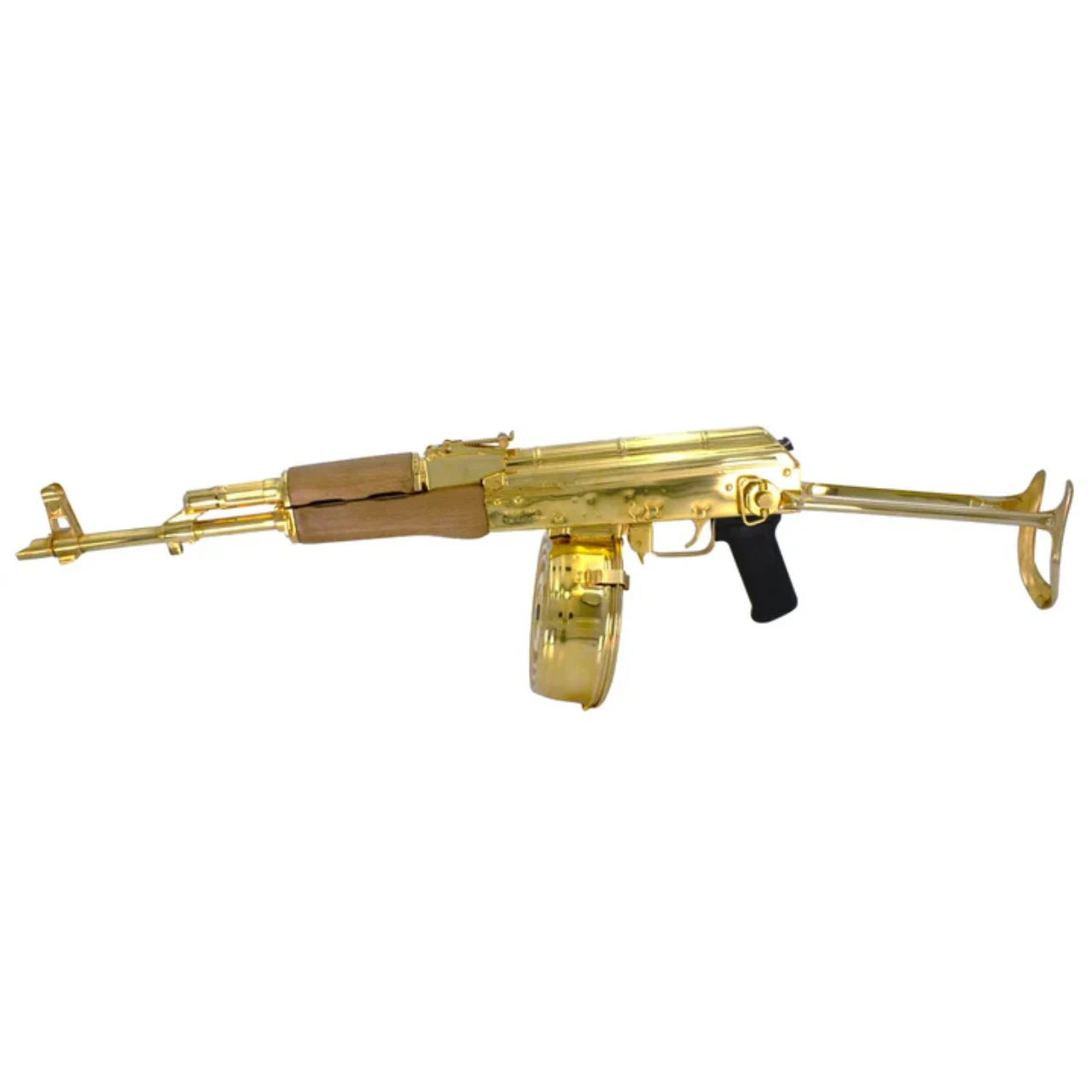
Different Types of AK-47s: A Comprehensive Guide
By Chad Skelton·
Different Types of AK-47s: A Comprehensive Guide
The AK-47, or Kalashnikov rifle, is one of the most iconic firearms in history. Known for its reliability, simplicity, and widespread use, the AK-47 has been manufactured in various types, variants, and adaptations over decades. Whether you’re a firearm enthusiast, collector, or someone seeking to understand its evolution, exploring the differences in types of AK-47s is crucial to appreciating this legendary rifle. In this blog post, we’ll dive into the key differences between AK-47 types, including their origins, calibers, features, and modern adaptations.1. The Original AK-47: A Historical Introduction
The AK-47 was developed by Mikhail Kalashnikov in 1947 in the Soviet Union. It was officially adopted by the Soviet Armed Forces in 1949.Key Features of the Original AK-47
- Caliber: 7.62×39mm
- Design: Milled receiver (early models)
- Fire Modes: Selective fire (semi-automatic and fully automatic) unfortunately we only get this first models in the wild.
- Barrel Length: 16.3 inches
2. AK-47 Variants: Milled vs. Stamped Receivers
One of the earliest distinctions among AK-47 types is the receiver design: milled versus stamped.Milled Receiver AK-47
- Construction: Solid block of steel, machined into shape.
- Advantages: Extremely durable and stable, reducing flex during firing.
- Disadvantages: Heavier and more expensive to produce.
Stamped Receiver AK-47
- Construction: Sheet metal, stamped into shape and reinforced with rivets.
- Advantages: Lighter weight, faster and cheaper to manufacture.
- Disadvantages: Slightly less rigid than milled counterparts.
3. AKM: The Modernized AK-47
In 1959, the AKM (Avtomat Kalashnikova Modernizirovanny) was introduced as an upgrade to the original AK-47.Differences Between AK-47 and AKM
- Receiver: AKM uses a stamped receiver, unlike the original milled design.
- Weight: Lighter due to stamped construction and a redesigned gas block.
- Accuracy: Slightly improved with better sights and muzzle devices.
- Production: Easier and cheaper to mass-produce.
4. Regional Variants of the AK-47
Several countries produced their own versions of the AK-47, often with unique modifications tailored to their needs.Chinese Type 56
- Manufacturer: Norinco (China)
- Key Features:
- Hooded front sight (different from the open sight of standard AK-47s).
- Spike or blade bayonet attached to the rifle.
- Reliable and rugged but known for less refined finishing.
Romanian WASR-10
- Manufacturer: Cugir Arms Factory (Romania)
- Key Features:
- Based on the AKM design.
- Typically imported as a civilian version with modifications for semi-automatic only.
- Known for its affordability and wide availability in the civilian market.
Yugoslavian Zastava M70
- Manufacturer: Zastava Arms (Serbia, formerly Yugoslavia)
- Key Features:
- Heavy-duty construction with a reinforced front trunnion.
- Grenade launcher attachment and flip-up sights for grenade aiming.
- Often equipped with unique handguards featuring three cooling slots.
East German MPi-KM
- Manufacturer: Ernst Thälmann Factory (East Germany)
- Key Features:
- Close copy of the AKM.
- Distinctive polymer furniture in red or brown.
- Highly sought after by collectors for its quality craftsmanship.
5. Caliber Variations in AK Rifles
The traditional AK-47 is chambered in 7.62×39mm, but over time, various calibers have been used in AK variants to meet different requirements.7.62×39mm
- The original and most common caliber.
- Known for its stopping power and penetration.
- Widely available worldwide.
5.45×39mm (AK-74)
- Introduced in the AK-74, a successor to the AKM.
- Lighter recoil and higher velocity than 7.62×39mm.
- Improved accuracy and flatter trajectory.
5.56×45mm NATO
- Used in some export versions, such as the Romanian SAR-3 or Polish Beryl.
- Compatible with NATO ammunition for international customers.
.308 Winchester / 7.62×51mm NATO
- Found in specialized AK variants like the Zastava M77.
- Offers extended range and power for hunting or long-range shooting.
6. AK-74: Evolution of the AK Series
The AK-74 was introduced in the 1970s to replace the AKM. It features several significant upgrades:- Caliber: Chambered in 5.45×39mm for improved accuracy and reduced recoil.
- Design: Features a redesigned muzzle brake to manage recoil and muzzle rise.
- Weight: Lighter than the AKM due to refinements in materials and construction.
- Furniture: Often features polymer stock and handguards instead of wood.
7. Civilian AK-47 Variants
Civilian versions of AK rifles are typically semi-automatic to comply with firearm regulations. Popular models include:WASR-10
- Romanian-made and widely available in the U.S.
- Budget-friendly option for civilian shooters.
Century Arms RAS47
- Made in the USA by Century Arms.
- Affordable but with mixed reviews on quality.
Zastava ZPAP M70
- Serbian-made and known for excellent craftsmanship.
- Built with heavy-duty components for durability.
8. Differences in Furniture and Accessories
AK-47 types also differ in their furniture (stocks, handguards, grips) and available accessories.Traditional Wood Furniture
- Found on original AK-47s and early variants.
- Provides a classic aesthetic but is heavier.
Polymer Furniture
- Common in modern AKs like the AK-74 or AK-12.
- Lightweight, weather-resistant, and often more ergonomic.
Folding Stocks
- Side-folding or under-folding stocks are common in many variants like the AKMS.
- Designed for portability and compact storage.
Optic Mounts
- Modern AKs often include side-rail mounts or Picatinny rails for attaching optics.
- Traditional models may require aftermarket solutions for optics.
9. Modern AK Variants: The AK-12
The AK-12 represents the latest evolution of the AK family, designed for the Russian military.Key Features
- Caliber: Chambered in 5.45×39mm (standard), with variants in other calibers.
- Ergonomics: Adjustable stock, improved grip, and ambidextrous controls.
- Rail System: Integrated Picatinny rails for optics and accessories.
- Recoil Management: Enhanced muzzle device and improved gas system.
10. Factors to Consider When Choosing an AK-47
If you’re in the market for an AK rifle, consider these factors:- Purpose: Is it for self-defense, recreational shooting, or collecting?
- Caliber: Choose based on availability, recoil preference, and intended use.
- Budget: Prices vary widely depending on brand, country of origin, and features.
- Build Quality: Look for reputable manufacturers and durable construction.
11. Comparing Original AKs to Modern Clones
Original AK-47s, particularly Soviet-made models, are rare and highly valued by collectors. Modern clones and variants offer similar performance with updated features.Original AK-47
- Historical value and authenticity.
- Milled construction with a heavier design.
Modern Clones
- Enhanced ergonomics, lighter weight, and accessory compatibility.
- More affordable and widely available for civilian use.